
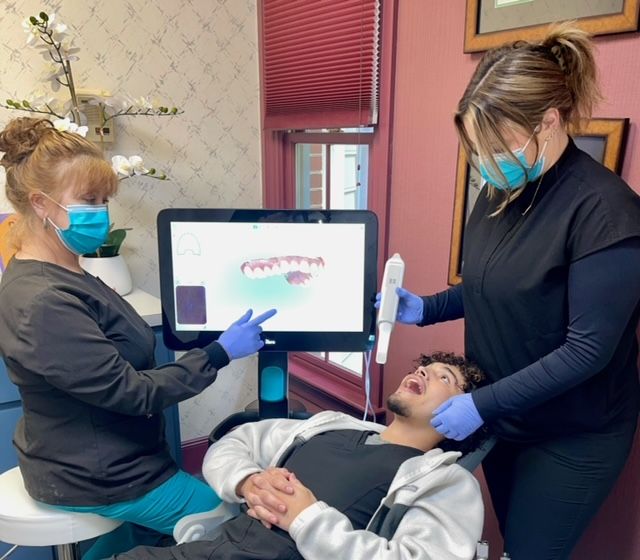
Almost every teen and adult who sits in our consult chair asks some version of the same question: can I get braces that do not look like braces? The honest answer is that you have real options, and the right one depends less on style than on your bite, your habits, and your budget.
Ceramic and Metal Braces Do the Same Job
Both kinds of braces work the same way. A bracket is bonded to each tooth, an archwire runs through those brackets, and the wire delivers gentle, continuous pressure that moves teeth through bone. What changes between the two is the material the bracket is made from.
Metal brackets are stainless steel. Ceramic brackets are a tooth-colored polycrystalline material, so they blend with enamel and are far less obvious in photos and on video calls. Pair ceramic brackets with a frosted or tooth-colored wire and most people have to be told you are in treatment before they notice. Read more about how we approach braces treatment before you decide.
Side-by-Side Comparison
| Metal braces | Ceramic (clear) braces | |
|---|---|---|
| Visibility | Clearly visible | Blends with tooth color |
| Strength | Highest – very hard to break | Strong, but more brittle at the corners |
| Cost | Lowest bracket cost | Typically a few hundred dollars more |
| Staining | Brackets do not stain | Brackets resist stain; elastic ties can pick up color from coffee, tea, and curry |
| Bracket size | Slimmest profile | Slightly bulkier |
| Best for | Kids, athletes, complex bites | Teens and adults focused on appearance |
Where Ceramic Braces Shine
Ceramic brackets make the most sense for the patient who wants fixed braces but has a reason to keep them quiet: a senior year of photos, a wedding, a job that puts you in front of clients all day. They handle the same tooth movements as metal, including rotations and bite correction, which is exactly why we still recommend fixed braces over removable options for many of the bites we see.
A common compromise is worth knowing about. Some patients choose ceramic brackets on the upper front teeth, where they show when you smile, and metal on the lower or back teeth, where nobody sees them and chewing forces are highest. That combination keeps the visible difference and saves money at the same time.
Where Metal Still Wins
If you play contact sports, grind your teeth, or are ten years old and hard on everything you own, metal is the practical choice. Steel brackets take abuse. Ceramic can chip at the wings if it takes a direct hit, and a broken bracket means an unplanned repair visit and, sometimes, a slower finish. Metal is also the lower-cost route, which matters when you are budgeting for two kids in treatment at once. Our braces for kids page walks through what treatment looks like at that age.
What About Lingual Braces?
One other option comes up in searches. Lingual braces are metal brackets bonded to the tongue side of the teeth. They are genuinely invisible from the front, but they cost more, take longer to get used to, affect speech for a few weeks, and are harder to clean.
This is where a consult earns its keep. Some bites are straightforward and several routes would get there. Others – deep bites, significant rotations, teeth that need bodily movement rather than tipping – are far more predictable in fixed braces. We would rather tell you that in person than have you spend a year in the wrong appliance. See the common orthodontic problems we treat for a sense of which cases fall where.
Cost in Tallahassee
Ceramic brackets generally add a modest amount to the total compared with metal, because the brackets themselves cost the practice more and repairs are more likely. The bigger cost drivers are how long you are in treatment and how complex the bite is, not the bracket material. We publish real numbers rather than making you call for them – see our breakdown of what braces cost in Tallahassee and our payment options, including monthly plans with no interest.
What Actually Drives the Number
Two cases with identical brackets can differ by thousands of dollars, and the reasons are always the same three. First, complexity: closing extraction spaces or correcting a significant overbite takes more appointments and more months than straightening mild crowding. Second, duration: a twelve-month case costs less to deliver than a twenty-eight-month one. Third, what is bundled – at our office, retainers, emergency visits, and the final records are part of the quoted fee rather than line items that appear later. When you compare offices, compare those inclusions, not just the headline number.
One more practical note for Tallahassee families: most orthodontic insurance benefits are a lifetime maximum, not an annual one, and they usually do not care which bracket you choose. If you have two children who will both need treatment, it is worth mapping out the timing before you start, and we are happy to do that at a consult even if nobody is ready to begin.
Living With Ceramic Braces
The brackets themselves do not stain. The small elastic ties that hold the wire in place can, and they are replaced at every adjustment, so any discoloration is temporary. Still, a few habits keep them looking clear:
- Drink coffee, tea, red wine, and dark sodas through a straw when you can, and rinse with water afterward.
- Go easy on curry, tomato sauce, and turmeric in the days right after an adjustment.
- Brush after meals with a soft brush and a non-whitening paste – abrasive whitening pastes dull ceramic.
- Skip whitening strips during treatment. Enamel under the brackets will not lighten, and you will see the outlines when the brackets come off.
- Cut hard foods small and skip anything sticky, which is the same rule as metal, only enforced a little more strictly.
The first few days feel the same as any new braces: pressure, tender teeth, a lip or cheek that needs wax. Our guide to adjusting to braces covers what to expect that week. If a bracket comes loose or a wire pokes, do not wait for your next appointment – call us and we will get you in.
How Long Will I Be in Treatment?
Most comprehensive cases run 18 to 24 months, with simple ones finishing closer to 12 and complex bites running past 30. What shortens treatment is not the appliance – it is showing up for adjustments on schedule, wearing elastics when they are prescribed, and not breaking things. What lengthens it is missed appointments and repeated repairs. That is the one place bracket choice can quietly cost you time, because ceramic is the more breakable of the two.
Frequently Asked Questions
Do ceramic braces take longer than metal?
Not by design. Treatment time is driven by the bite, not the bracket. In practice, cases with repeated bracket breakage run longer, and ceramic breaks a little more often, so careful patients finish on the same schedule as metal.
Are ceramic braces more painful?
No. The soreness comes from teeth moving, and both systems move teeth the same way. Ceramic brackets are slightly larger, so some patients notice them against the lip a bit more in the first week.
Can teens get clear braces?
Yes, and many do. The question we ask is whether the teen plays a contact sport and how reliable they are about food rules. A mouthguard solves the first problem; the second is a conversation. Our braces for teens page covers what treatment looks like at that age.
Will insurance treat them differently?
Most orthodontic benefits pay a flat lifetime amount toward treatment regardless of bracket type, so the difference in material usually comes out of pocket. We verify your benefits before you commit to anything.
Do ceramic brackets damage enamel when removed?
No. Removal and cleanup are done with the same care as metal. What matters more for enamel is how well you brush during treatment – decalcification marks come from plaque left around brackets, not from the brackets themselves.
Talk It Through With Dr. R
Whichever bracket you lean toward, the choice gets much easier once someone has actually looked at your bite. Dr. Maryam Rezaie sees families from all over Tallahassee at our Thomaswood Drive office, and the first visit costs nothing. Request your free consult, or if you would rather start from your couch, send photos through our virtual consult. You can also call or text us at (850) 385-8101.