
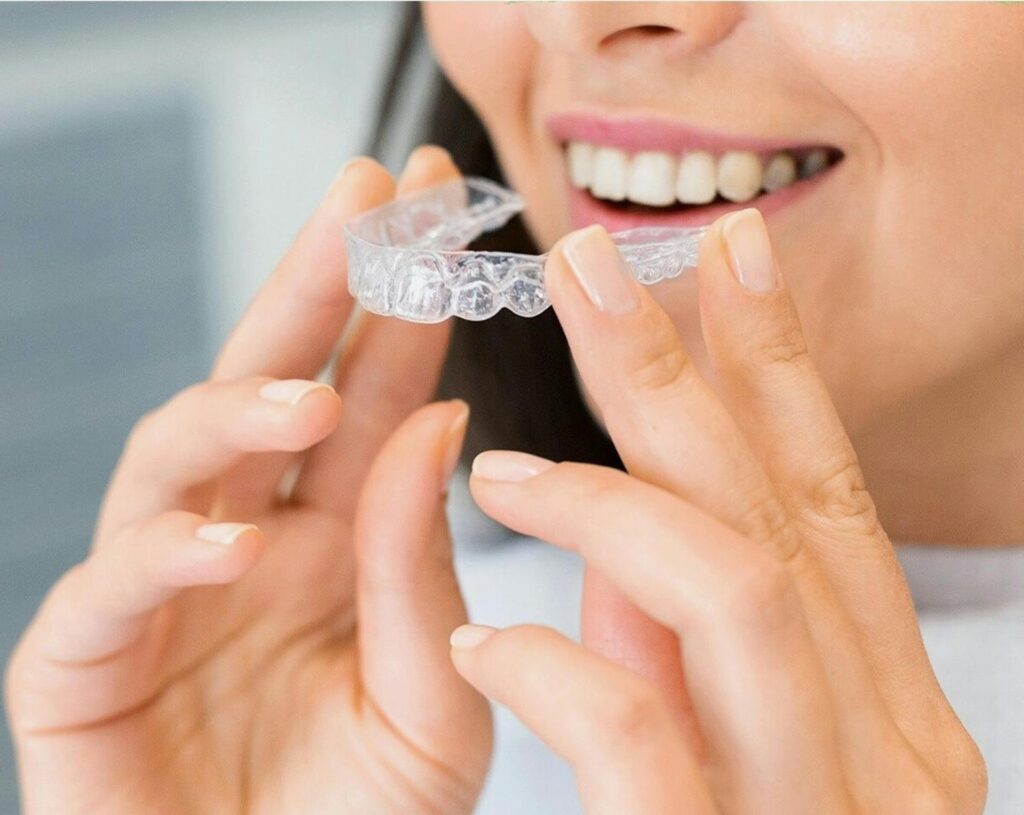
You need a retainer after braces because teeth naturally drift back toward their old positions once brackets come off. A retainer holds them in place while the gums and bone settle, and night wear keeps them there for the long term.
Retainers are the least exciting part of orthodontic treatment and the part that decides whether the result lasts. This guide covers why teeth move after braces, the main types of retainers and how they compare, how long you will wear one, how to keep it clean, and what to do when one breaks or goes missing.
Why do teeth shift after braces come off?
Braces move teeth by gently pressing on them until the bone around each root remodels. When the brackets come off, that new bone is still soft and the fibers that connect teeth to the gums are still stretched. Those fibers behave a little like rubber bands that remember the old arrangement, and they pull for months afterward.
What is relapse?
Relapse is the word orthodontists use for teeth drifting back toward where they started. It is usually gradual: a lower front tooth that rotates slightly, a small space that reopens, or crowding that returns over a few years. It rarely undoes a whole case, but small changes are exactly what people notice in photos.
Do teeth keep moving even years later?
Yes. Teeth shift slowly throughout life, whether or not you ever had braces. Chewing forces, natural changes in the jaw with age and habits like clenching all play a part. That is why orthodontists treat retention as a lifelong habit rather than a short phase at the end of treatment.
What are the main types of retainers?
There are two broad families: fixed retainers that stay bonded to the teeth, and removable retainers you take in and out. Your orthodontist chooses based on how your teeth moved, how likely they are to relapse and how consistent you expect to be with wear.
Fixed (bonded) retainers
A fixed retainer is a thin wire bonded to the tongue side of the front teeth, most often the lower front teeth. It works around the clock without any effort from you and cannot be left on a lunch tray. The trade-off is cleaning: plaque collects along the wire, so flossing takes a threader or a water flosser.
Clear removable retainers
A clear removable retainer is a thin, custom-fitted plastic tray made from a scan or impression of your finished teeth. It is nearly invisible, comfortable for most people and easy to clean. Because it covers the biting surfaces, it can wear out or crack over time and needs to be replaced periodically.
Hawley (wire and acrylic) retainers
A Hawley retainer combines a wire that runs across the front teeth with an acrylic piece that sits against the roof of the mouth or behind the lower teeth. It is durable and can be adjusted, but the wire is visible and it can affect speech for the first few days.
Can you have both a fixed and a removable retainer?
Often, yes. A common plan in our practice is a thin wire bonded behind the lower front teeth plus a clear removable retainer, worn full time at first and then at night. The fixed wire protects the teeth most prone to crowding, and the removable retainer holds everything else. We explain how that plan starts on the day your braces come off in our guide to braces removal day.
How do fixed and removable retainers compare?
The table below summarizes the trade-offs. None of these options is best for everyone; the right choice depends on your bite and your habits.
| Retainer type | How it is worn | Visibility | Cleaning | Main drawback |
|---|---|---|---|---|
| Fixed bonded wire | Stays on all the time behind the front teeth | Hidden from the front | Brush carefully, floss with a threader or water flosser | Plaque builds up along the wire; a loose bond needs a repair visit |
| Clear removable | Full time at first, then nights as directed | Nearly invisible | Rinse and brush the tray daily, cool water only | Easy to lose; warps with heat and wears out over time |
| Hawley (wire and acrylic) | Full time at first, then nights as directed | Front wire is visible | Brush the acrylic and wire daily | Bulkier; may affect speech for a few days |
Which retainer is right for you?
The decision belongs to your orthodontist, because it depends on details of your case that are only visible in your records. Dr. Maryam Rezaie, who completed her orthodontic residency at Jacksonville University, weighs several factors before recommending a retention plan.
Factors that shape the recommendation
- How your teeth moved. Teeth that were badly rotated or crowded, or spaces that were closed, are the most likely to relapse and often benefit from a bonded wire.
- Your age and growth. Children and teens who are still growing may need their plan adjusted as the jaws mature.
- Your habits. If you know you will forget a removable retainer, a fixed wire takes that risk off the table.
- Your gum health and hygiene. A fixed wire asks more of your flossing routine, so it suits patients who will keep the area clean.
Does the choice affect cost?
The type of retainer, whether you need upper and lower retainers, and how often a removable one has to be remade all influence what retention costs over the years. Many practices include the first retainers in the treatment fee. Ask what your plan includes at your consultation so there are no surprises later.
How long do you need to wear a retainer after braces?
The honest answer is for as long as you want your teeth to stay straight. The schedule changes over time, though, and most people find it easier than they expected.
The first months: full-time wear
Right after braces come off, removable retainers are usually worn most of the day and night, coming out only to eat, drink anything other than water and brush. This is when the bone and fibers are most likely to pull teeth back, so it is also when skipped days do the most damage. Your orthodontist will tell you exactly how long this stage lasts for you; it is part of the overall treatment timeline.
After that: nights for the long term
Once your teeth are stable, most people move to wearing a removable retainer while they sleep. Many orthodontists, including our team, recommend continuing night wear indefinitely. A retainer that still clicks in easily is a good sign; one that feels tight after a few nights off means your teeth have started to move.
What happens if you stop wearing it?
Some teeth will start to shift. Minor movement can sometimes be guided back by resuming wear if the retainer still fits. If it no longer fits, do not force it; call your orthodontist, because a new retainer or a short course of treatment may be needed. Adults who stopped wearing retainers years ago are a common reason people come back to an orthodontist as adults.
How do you clean and care for a retainer?
A clean retainer is more comfortable, smells better, lasts longer and is easier to maintain. The routine is simple once it becomes a habit.
Caring for a removable retainer
- Rinse it every time you take it out, before saliva and plaque dry on it.
- Brush it gently once a day with a soft toothbrush and mild, unscented soap. Toothpaste can scratch clear plastic and make it cloudy.
- Use cool or lukewarm water only. Hot water, dishwashers and a hot car can warp the plastic.
- Store it in its case every time it is out of your mouth. Most lost retainers were wrapped in a napkin.
- Keep it away from pets; dogs are drawn to the smell and chew retainers regularly.
Caring for a fixed retainer
Brush along the wire carefully and floss under it each day with a floss threader or a water flosser. Avoid biting directly into very hard foods with your front teeth. At checkups, your orthodontist will confirm the bond is intact and that tartar is not building up behind the wire.
What should you do if your retainer breaks or gets lost?
Treat it as time-sensitive. Teeth can begin to drift within days of a retainer going missing, so a lost retainer matters more than its lack of pain suggests.
A broken or lost removable retainer
Collect any pieces, do not try to glue or repair it yourself, and call the office to arrange a replacement. If you still have an older retainer that fits, wear it in the meantime. Our emergency orthodontist page explains which problems need a same-day call.
A loose or broken bonded wire
If one tooth comes unglued from the wire or the wire feels sharp, call us so it can be rebonded before teeth shift. Cover a sharp end with orthodontic wax until your visit. The same steps we recommend for poking wires during braces work here too.
Frequently asked questions about retainers
Do retainers hurt?
A new removable retainer can feel snug for the first few days, and you may notice pressure if you skip a night. Lasting pain is not normal; call us if it continues or if the retainer rubs a sore spot.
Can I eat with my retainer in?
Take removable retainers out to eat and to drink anything other than plain water, then brush before putting them back. Fixed retainers stay put while you eat, so avoid biting hard or sticky foods with your front teeth.
How often does a removable retainer need to be replaced?
It depends on wear, grinding and care. Replace it when it cracks, warps, turns cloudy or no longer fits snugly, and bring it to checkups so the fit can be assessed.
Will my speech change with a retainer?
Some people lisp slightly for a day or two with a new removable retainer, especially a Hawley. Reading aloud speeds the adjustment, and it usually passes within the first week.
Protect your result with Vibrant Orthodontics
Your retainer is what keeps the months you spent in braces working for you. If you are finishing treatment, need a replacement retainer, or noticed your teeth shifting years after braces, our team can help. Dr. Rezaie and the team see patients Monday through Thursday, 8 AM to 5 PM, and Friday, 9 AM to 5 PM, at 1350 Thomaswood Dr in Tallahassee. Call or text (850) 385-8101, or request your free consult online. You can read more about Dr. Rezaie on her doctor profile.